

Traffic Control
One Call. One Team. Get More Out.
Traffic control for utility work zones across Ontario. OE plans and runs the traffic control around its own work, with traffic control plans, lane closure permits, flagging personnel and municipal coordination, so vehicles and pedestrians keep moving safely past the job.
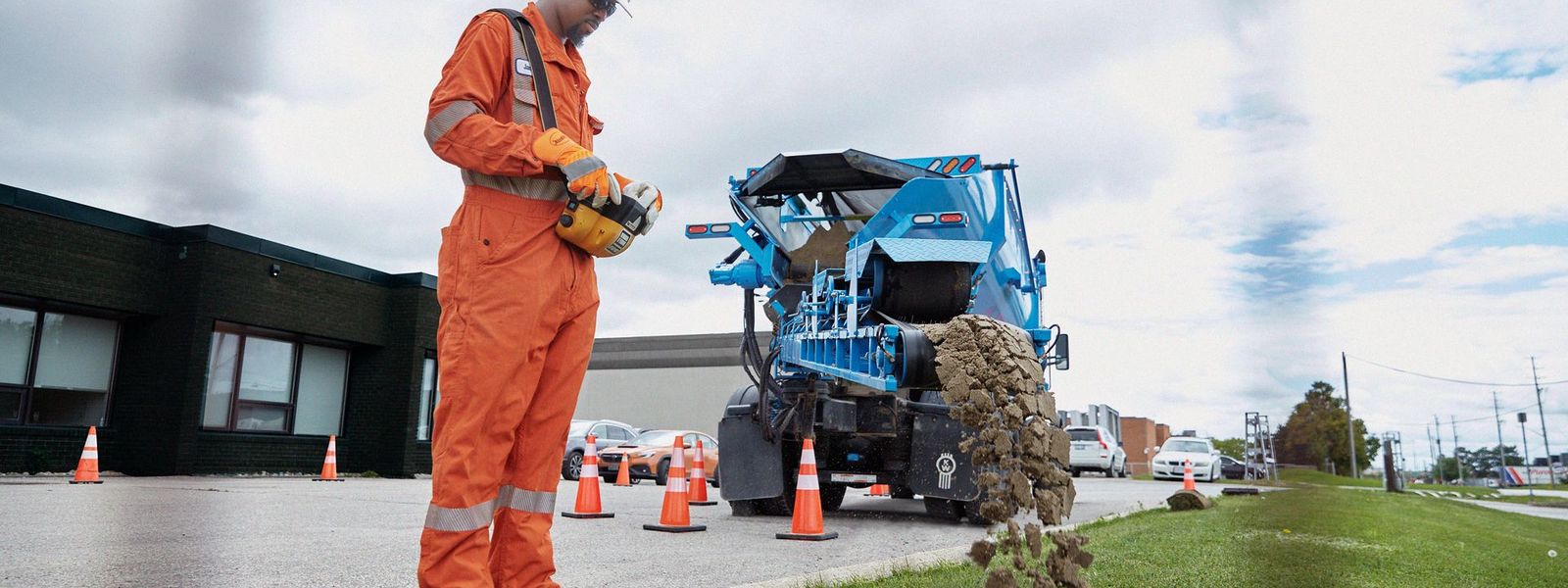
Traffic Control From the Company Doing the Work
OE's traffic control keeps vehicles and pedestrians moving safely and efficiently around its work zones.
Traffic control and pedestrian signage are part of OE's site preparation, alongside locates, permits, homeowner notifications and site hazard planning. Because the traffic control comes from the same company as the excavation, it is planned with the job, not added on after.
One call gives fast, easy access to streamlined end-to-end services, with the traffic control included.
Traffic control and pedestrian signage are set up with the locates, permits and hazard planning.
Plans built for the safe, efficient movement of vehicles and pedestrians around the work zone.
OE's traffic control team works with site teams, regulatory authorities and municipal traffic authorities.
A fleet of over 200 units, with crews at 6 locations across Ontario.
What Traffic Control Includes
Temporary traffic control uses signs, devices and traffic control persons to protect workers, drivers and pedestrians wherever utility work occupies the road right-of-way.
In Ontario, the Ontario Traffic Manual's Book 7, Temporary Conditions, gives the practical guidance for traffic control devices in temporary work zones, and its Office Edition is used to design traffic control plans. The road authority — the municipality or the province — decides what goes on its roads: signs and devices are installed only with its approval, and contractors set them up when it authorizes them. Where a lane or shoulder has to be occupied, municipalities such as King Township require a traffic control plan, prepared by a qualified contractor to Book 7, with the road occupancy permit application.
Traffic Control Capabilities
From the plan on paper to the cones on the road.
Traffic Control Plans
Traffic management plans for the work zone, built around the safe movement of vehicles and pedestrians.
Lane Closure Permits
Applications to the road authority when a lane or shoulder has to be occupied for the work.
Flagging Personnel
Traffic control persons who direct traffic through or around the work zone.
Municipal Coordination
Working with municipal traffic authorities on the requirements for each job.
Pedestrian Signage
Traffic control and other pedestrian signage as part of site preparation.
Safety Compliance & Monitoring
Traffic control implementation monitored for safety compliance through the job.
Traffic control booked with the job, not after it
OE's 24/7 emergency hotline is ready when you need it.
Where OE's Traffic Control Fits
Wherever OE's work meets traffic or foot traffic.
Hydro Excavation
Site preparation for hydrovac work on and beside the road.
Water Distribution
Traffic control for water service, water box and curb stop work.
Gas Distribution
Traffic control for gas service excavation and restoration.
SUE Test Holes
Traffic control as part of Turnkey SUE — Level A test holes.
Keyhole Coring
Work zones for keyhole coring in roads and sidewalks.
Surface Restoration
Keeping the work zone safe through restoration.
Lane & Shoulder Occupations
Work that occupies a lane or shoulder of a municipal road.
Sidewalks & Pedestrian Areas
Pedestrian signage where work affects the sidewalk.
One Company From Set-Up to Take-Down
The traffic control, the excavation and the restoration by one team, in one mobilization, instead of a separate traffic control contractor working to someone else's schedule.
Bundling the traffic control with the excavation and restoration it protects, in one mobilization, is where OE's LEAN approach pays off: up to 10% cost savings and 50% productivity gains when Customers book the full job with OE. OE runs integrated operations from 6 Ontario locations, and co-location reduces travel, emissions and cost. OE's NextGen units are still working trucks, but roughly ten decibels quieter than conventional ones.
Traffic Control Work in Ontario
[Job name to be confirmed]
[Job details to be confirmed by OE: Customer type, location, scope, and the traffic control provided.]
More Than Traffic Control — A Complete Utility Infrastructure Partner
Traffic control is one capability within OE's full service offering. Here's what else the team handles.
Hydrovac Trucks
Non-destructive daylighting, slot trenching, and utility exposure — safe digging around buried gas, electric, water, and telecom.
Read More →U-Fill Concrete Trucks
Controlled low strength material (CLSM), utility backfill, road base stabilization, and void filling.
Read More →Coring Trucks
Keyhole coring through roads and sidewalks, with the original core reinstated with Utilibond.
Read More →Material Slinger Trucks
Stone, gravel, sand and soil placed in a controlled stream to backfill and restore excavations.
Read More →Turnkey SUE — Level A
Turnkey subsurface utility engineering (SUE) test holes: locates, permits, coring, hydro excavation, backfill and restoration.
Read More →Soil Recycling
Hydrovac waste turned into clean fill, premium-grade sand and reclaimed water at the ECA-approved central GTA soil recycling facility OE utilizes.
Read More →Additional Services
Dump Trucks and Soft Services — material hauling, locates, permits, and project management that keep utility projects on schedule.
Read More →Traffic Control FAQ
Answers to the questions OE's sales team hears most often.
What is a traffic control plan?
Do I need a permit to close a lane?
Who can direct traffic as a traffic control person?
Who approves the signs and devices?
Can traffic control be booked with the excavation?
Does OE look after pedestrians too?
OE Crews Across Ontario
OE serves Customers from six locations across Ontario. Select any location for detailed service area information.
Request a Quote
Tell us about your project — we'll respond within 24 hours with a tailored quote and next steps. For urgent or after-hours needs, call our 24/7 dispatch line directly.